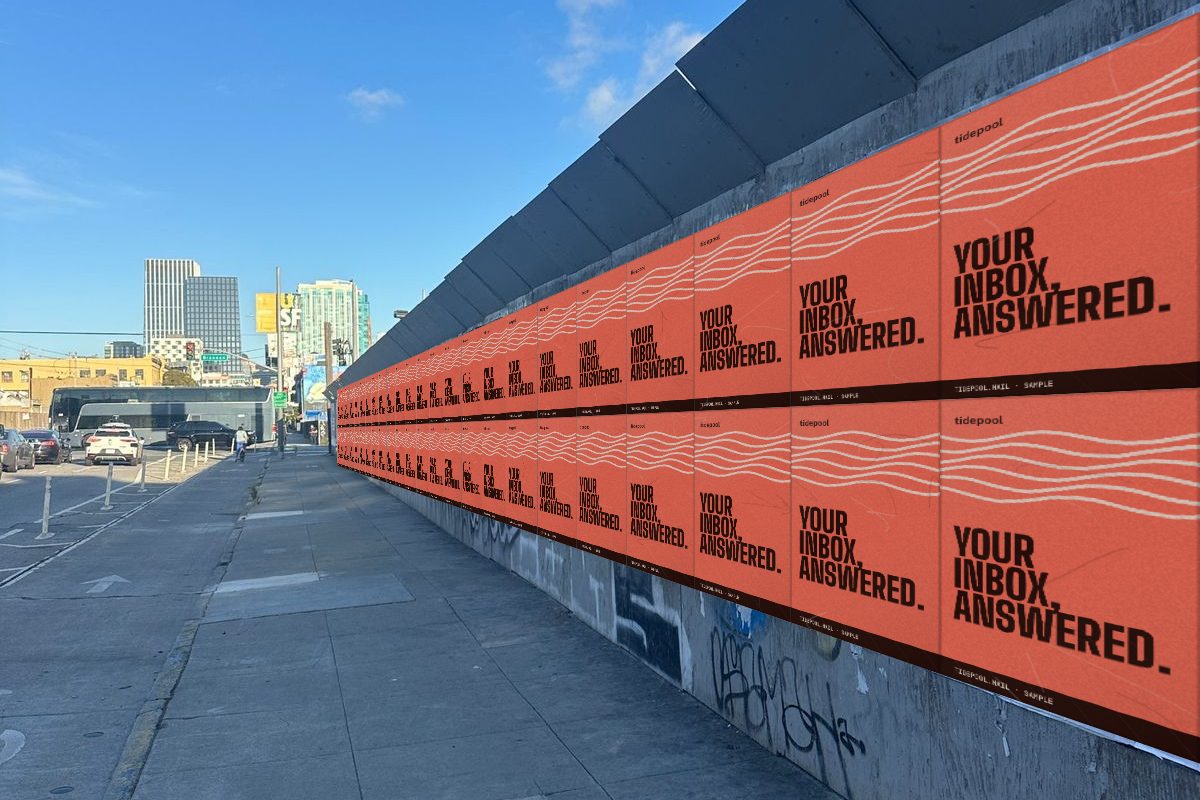
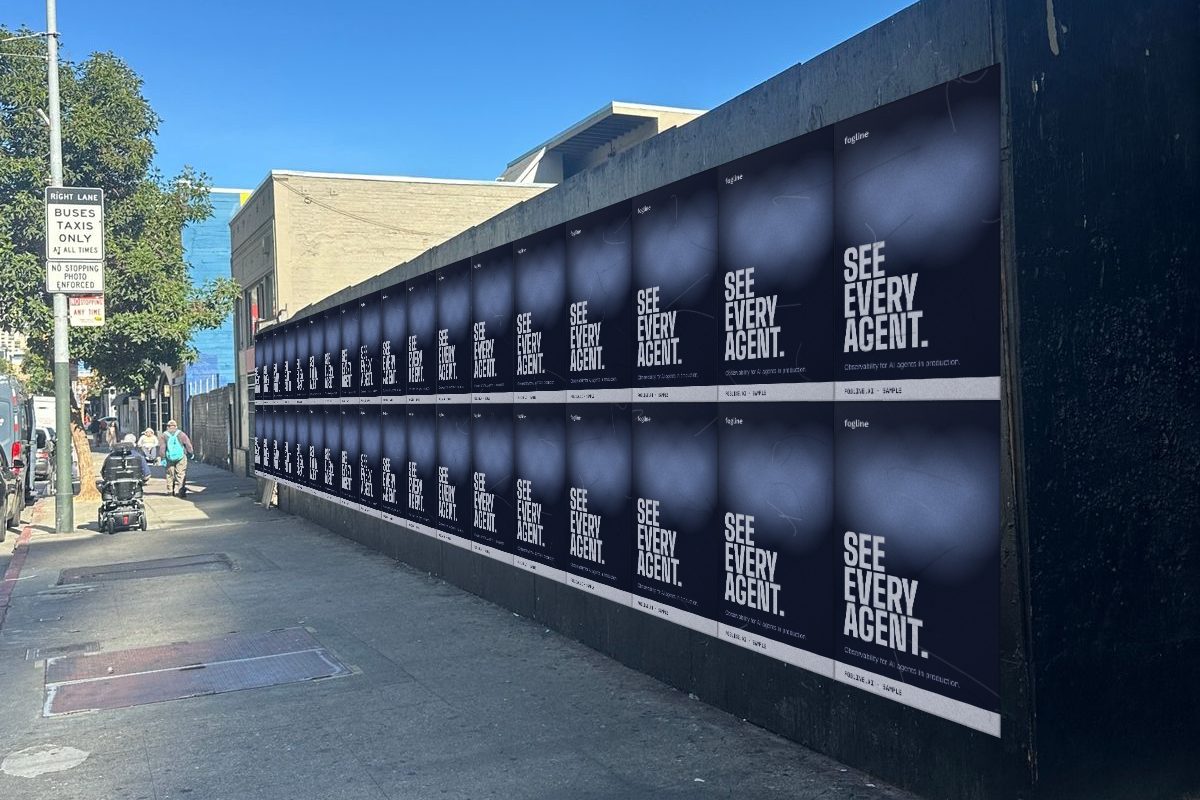
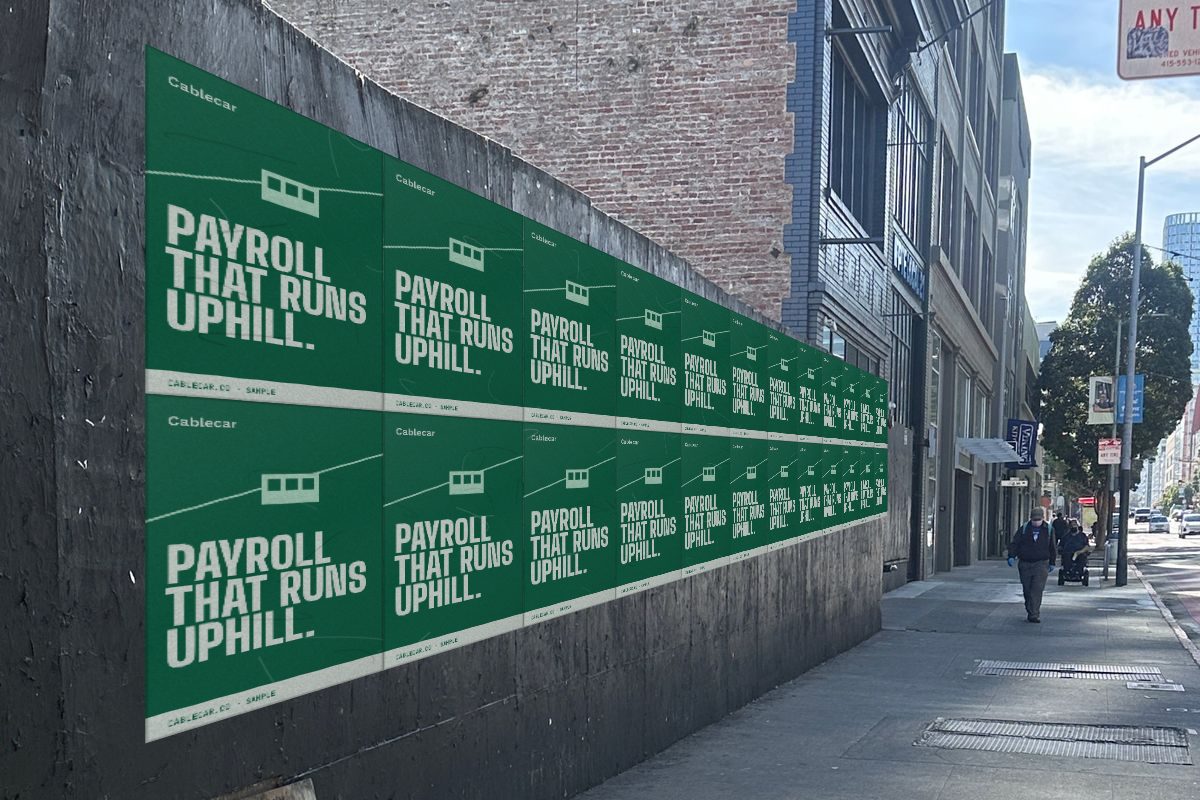
What is wheatpasting?
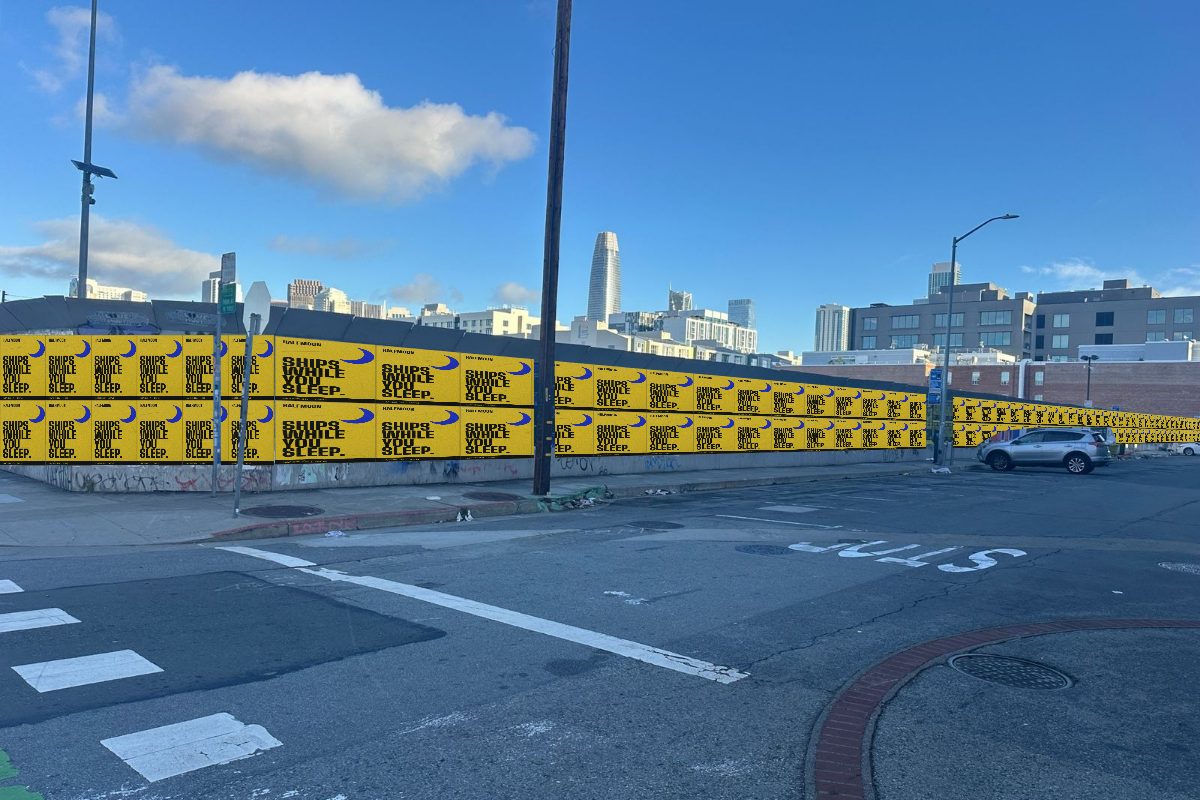
Wheatpasting, often called wild postings or street posters, is the practice of pasting printed paper posters onto street-level walls in repeating rows, so a single message fills a whole stretch of sidewalk. If you've walked through SoMa or the Mission and seen thirty identical posters shouting the same line, you've seen a wheatpaste campaign.
It's one of the oldest forms of outdoor advertising, and it's having a moment again in San Francisco. Here's how it works, what it's good for, and what to ask before you book one.
How a wheatpaste campaign works
The mechanics are simple, which is part of the appeal:
- Design. You create one or more poster designs, usually at 24×36 inches.
- Print. Posters are printed on paper made to take paste and hold up outdoors.
- Paste. A crew applies adhesive to the wall, lays the poster on, and brushes another coat over the top. Traditionally the paste was a cooked flour-and-water mix (hence "wheat" paste). Most professional crews now use commercial wallpaper paste, which holds better in fog and rain.
- Repeat. Posters go up in grids and long runs: four, ten, sometimes a hundred on one wall.
- Maintain. Crews come back during the run to replace anything torn, tagged or covered.
Why repetition is the whole point
A billboard shows one message once, to people moving past at speed. A wheatpaste wall shows the same message over and over, at eye level, to people on foot. Someone walking a block past a full wall can see your poster dozens of times in a minute. That repetition is what makes a new brand name stick.
It also photographs well. A wall of identical posters is a natural backdrop, so campaigns tend to travel beyond the street onto Instagram, LinkedIn and X.
Common poster sizes
- 24×36 inches: the standard. Big enough to read from across a sidewalk, small enough to repeat many times on one wall.
- 48×72 inches: the "jumbo," usually printed as four tiled 24×36 sheets. Good for a single hero image or a giant headline.
- A mix: one jumbo anchoring a wall, surrounded by standard posters. This gives you a focal point plus repetition.
How long does a campaign last?
Most campaigns run in two-week blocks: two, four or six weeks. Posters on a busy wall get torn, rained on or covered by other postings, which is why good crews schedule refresh runs during the campaign rather than pasting once and walking away. At SF Wheatpasting, every run includes two refresh visits a week.
What does it cost?
Pricing depends on how many walls, how many posters per wall, poster size, neighborhoods and run length. Industry benchmarks put a two-week, single-city campaign somewhere around $5,000 to $25,000 (AdQuick). Our San Francisco campaigns start from $2,500 for two weeks, plus printing. We break this down in How much does wheatpasting cost in San Francisco?
Who uses wheatpasting?
- Startups launching a product that need a city to know their name this week.
- Fashion and streetwear brands dropping a collection.
- Music, film and media promoting a release or a show.
- Events and venues filling seats for a specific date.
- Companies recruiting in a specific neighborhood.
Wheatpasting, wild postings and street posters
You'll hear the same thing called by different names: wheatpasting, wild postings, street posters, poster runs or poster sniping. They all describe repeated paper posters on street-level walls. "Wheatpasting" refers to the paste that holds them up; "wild postings" is a common industry term for the posters themselves. Whatever you call it, the questions to ask a vendor are the same.
What to ask any wheatpaste vendor
- Which exact walls will my posters go on, and can I see photos before I book?
- Is printing included, or is that extra?
- How often do you refresh the walls during the run?
- Will I get photo proof of every wall once it's up?
- How fast can you go up if my launch date moves?
Those five questions separate a real campaign from a box of posters and a hope.